
- Home
- Residential
- Water Softeners & Conditioners
Residential
- MATRIKX Carbon Block & Extruded Carbon Filter Cartridges
- Quantum 1000 Water Filtration System
- Gold Line Reverse Osmosis Water Systems
- Quantum 1000 Filter Cartridge
- Pentek Pentair Speciality Filter Cartridges
- Water Storage Tanks for Reverse Osmosis Water System
- Quick Connect & Push in Fittings
- Culligan Compatible Membranes
- Rain Soft Genuine & Compatible Membranes
- Hydrotech Genuine and Compatible Membranes
- PURO TWSIT Reverse Osmosis Water System NSF Approved Gold Seal
- Res Care Water Softener Resin Cleaner RK41N 1 Gallon (3.78 L)
- PRO CHEMICALS PROFESSIONAL WATER TREATMENT PRODUCTS
- PuroTwist Replacement Filters and Membranes
- Potassium Permanganate Green Sand Iron Filter Regeneration
- Res Care Water Softener Resin Cleaner RK32N 1 QT (0.946 ml)
- Culligan, Hydrotech, Microline, Rain Soft Compatible and Original Filter Cartridges and Membranes
- Pacifik Bottled Water Cooler and Dispensers
- Pacifik Bottle Lass Water Cooler and Dispensers
- AQUA ONE Antioxidant & Alkaline Reverse Osmosis Water Systems
- Fluoride & Lead Removal Water Systems
- ALKA + High pH Alkaline Water Filter
- Whole House Big Blue Water Filtration Systems
- Water Softeners & Conditioners
- Microline (Clack) Genuine and Compatible Membranes
- Water Softener with GAC & KDF
- Iron, Hydrogen Sulfide, Manganese, Radium, Arsenic, Color & Odor Removal Filtration Systems
- UlLTRA PRO Water Filtration System with Ultra Violet Light Sterilizer
- Water Cooler and Dispensers
- Bottle & Bottle Less Water Coolers and Dispensers on Lease & Rent
- Residential Water Distillers
- Membranes, Membrane Housings & Accessories
- Ultraviolet Light Sanitizers, Bulbs, Sleeves, Ballasts & Accessories
- Designer, Contemporary & Standard Faucets
- PENTEK Carbon Block & Extruded Carbon Filter Cartridges
- PENTEK Specialty Filter Cartridges
- PENTEK Sediments & Particle Filter Cartridges
- Water Filter Cartridges
- Tanks, Valves, Meters, Membranes & Other Accessories
Water Softeners & Conditioners
How They Work
To explain why water softeners are beneficial and how they work, one needs to understand the differences between hard and soft water. It is presumed in this document that the water you are using meets all health regulations and is known to be safe.
What is Hard Water?
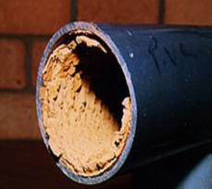
Hard water contains large amounts of calcium and magnesium two minerals that the soapy scum on glasses and lime residue on bathroom fixtures. While suitable for drinking and gardening, hard water can cause mineral build-up in water heaters, pipes, dishwashers and shower heads, reducing its flow. Soap and shampoo’s ability to lather is reduced, and laundry becomes stiffer and duller in appearance

As Table 1 shows, water hardness is measured with five different classifications and can be expressed in mg/litre or parts per million (ppm) or grains per gallon (gpg).
Sources of Hardness Water’s hardness is determined by the concentrations of multivalent cations in the water. Multivalent cations are cations (positively charged metal complexes) with a charge greater than 1+. Usually, the cations have the charge of 2+. Common cations found in hard water include Ca2+and Mg2+. These ions enter a water supply by leaching from minerals within an aquifer. Common calcium-containing minerals are calcite and gypsum. A common magnesium mineral is dolomite (which also contains calcium). Rain water and distilled water are soft, because they also contain few ions.
The following equilibrium reactions describes the dissolving/formation of calcium carbonate scales: CaCO3+CO2+H2O=Ca2++2HCO3−Calcium carbonate scales formed in water-heating systems are called lime scale. Calcium and magnesium ions can sometimes be removed by water softeners.
Table 1 Water hardness classifications
| Classification | Water Hardness | |
| Soft | below 17 mg/litre or ppm (0-1 gpg) | |
| Slightly hard | 17.1–60 mg/litre or ppm (1.1-3.5 gpg) | |
| Moderately hard | 61–120 mg/litre or ppm (3.67 gpg) | |
| Hard | 121–180 mg/litre or ppm (7.1 -10.5 gpg) | |
| Very hard | over 180 mg/litre or ppm (over 10.5 gpg) |
How Does a Water Softener Work?
A water softener uses a media that serves to exchange “ions” of calcium and magnesium with sodium and potassium.
This occurs in four steps:
- To do the ion replacement, the water in the house runs through a resin bed of small plastic beads or zeolites. The beads are covered with sodium or potassium ions. As the water flows past the ions, they swap places with the calcium and magnesium ions. Eventually, the beads contain nothing but calcium and magnesium, and softening stops. It is then time to regenerate the beads or zeolites.
- To regenerate, the beads need to regain their sodium or potassium ions by being flooded with a salty, brine solution that is rich in sodium or potassium.
- Once complete, the calcium and magnesium, dirt, and sediments are flushed from the beads and into the drain in a process called backwash.
- The final phase rinses the media tank with fresh water and loads the brine tank so it’s ready for the cycle.
Automatic water softeners are usually programmed to recharge at specific times that will not disrupt the occupants. It is more water-efficient to have a metered model that will regenerate only when required.
What are The Benefits of a Water Softener?
A water softener reduces water hardness, making it easier to shower and clean fabrics and dishes. With soft water, less soap is needed for bathing and laundry. Skin feels cleaner and clothing softer. Pipes, fixtures and appliances have less scale build-up. With less build-up, appliances can operate efficiently. Mineral-derived odours may be reduced; and, there are fewer deposit stains on bathroom fixtures.
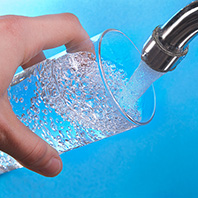

Water Softening is the reduction of the concentration of calcium, magnesium, and certain other metal cations in hard water. These “hardness ions” can cause a variety of undesired effects including interfering with the action of soaps, the build up of lime scale, which can foul plumbing, and galvanic corrosion. Conventional water-softening appliances intended for household, commercial & industrial use depend on an ion-exchange resin in which hardness ions are exchanged for sodium ions. Water softening is desirable where the source of water is hard.
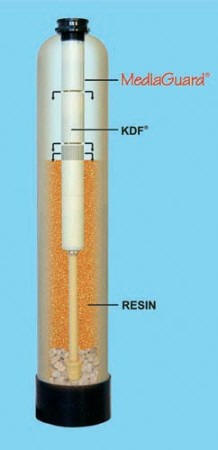
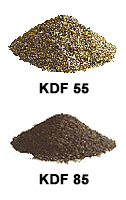
AQUA ONE water softener with GAC & KDF also removes chlorine, Chloramines, iron, Hydrogen Sulfide, Odor, Taste & potentially toxic metals ions such as lead and copper.
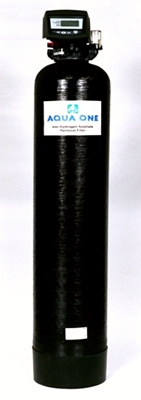
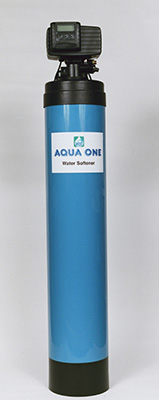
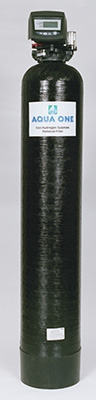
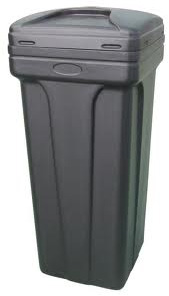
KDF Process Media vs. Activated Carbon
| KDF Media | Activated Carbon | |
|---|---|---|
| Life | More than 6 years* | Only 6 to 12 months |
| Bacteria and Algae | Controls Both | Permits Growth |
| Disposal | Recyclable | Hazardous Waste |
| Mechanism | Oxidation/Reduction | Adsorption |
| Lb/cu ft | 171 | 35 |
| Contaminants Eliminated | Inorganic | Organic |
| * With proper handling | ||
What about KDF Process Media and Reverse Osmosis, Di Ionize and Ion Exchange systems?
Reverse Osmosis (RO), Deionization (DI) and Ion Exchange (IX) systems benefit from the use of KDF Process Media because our Media allow these systems to tend to their strengths. Our Media protect RO systems from chlorine degradation and bacterial contamination, extending the life of the systems’ membranes. KDF Process Media protect expensive IX systems from becoming fouled with chlorine, algae, fungi and bacteria. Less fouling, longer life and reduced maintenance, all combine for lower costs.
KDF Process Media vs. Silver-Impregnated Carbon
| KDF Media | Activated Carbon | |
|---|---|---|
| Life | More than 6 years* | Only 6 to 12 months |
| Bacteria and Algae | Controls Both | Permits Growth |
| Disposal | Recyclable | Hazardous Waste |
| Mechanism | Oxidation/Reduction | Adsorption |
| Heavy Metals | Yes | No |
| pH | 6.5 to 8.5 | Sensitive |
| Use | POU/POE, Industrial, Commercial | Home Water Filter Products |
| US EPA Registration | Not Required | Required |
- Download Fleck Control Valve Brochure
- Download Autotrol Control Valve Brochure
- Download KDF Process Media Brochure
- Download Water Softener Brochure